
The policy of West Java Governor Dedi Mulyadi, which places 50 students in one class at secondary education institutions, has a significant impact on thousands of private schools.
Thousands of Private Schools in West Java Face Student Crisis Due to 50-Student Class Policy
English
By Fabio Maria Lopes Costa
13 Jul 2025 17:20 WIB · English
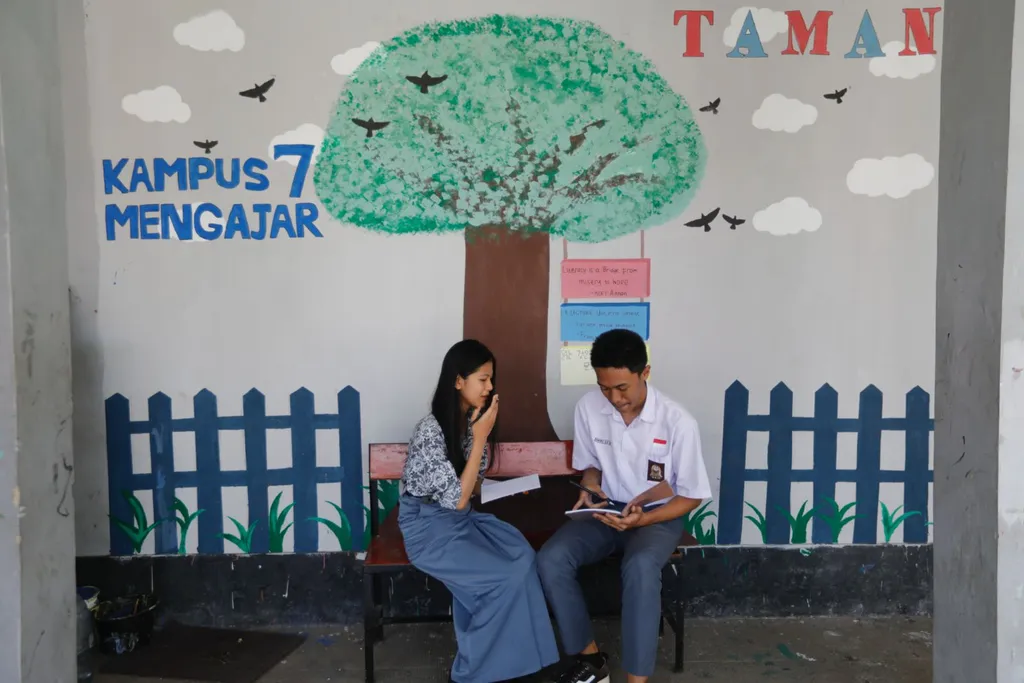
BANDUNG, KOMPAS – The policy of West Java Governor Dedi Mulyadi to increase the number of students in a learning group from 36 to 50 students in public high schools/vocational schools has had a significant impact. As a result of this policy, the enrollment of students in approximately 95 percent of the 3,858 private secondary schools in West Java has not yet reached 50 percent.
The data on the minimal acceptance of new students in thousands of schools comes from the West Java Private High School Principals Forum (FKSS). The organization firmly calls for a review of the policy regarding the increase in the number of students in learning groups (rombels).
The policy is outlined in the West Java Governor’s Decree Number 463.1/Kep.323-Disdik/2025 regarding Technical Guidelines for Preventing Children from Dropping Out of School to Secondary Education in West Java Province. This policy was established on June 26, 2025.
The technical guidelines stipulate, among other things, that prospective students are to be placed in educational units with a maximum of 50 students. This is in accordance with the analysis of the classroom space data that will be used, as regulated by the legislation.
Dedi Mulyadi’s policy is based on data released by the Ministry of Primary and Secondary Education in 2025. The data revealed that 66,192 students in West Java are recorded as having dropped out of school; 133,481 students in West Java graduated from junior high school but did not continue their education; and 295,530 individuals have never attended school.
“Approximately 95 percent of the total 3,885 private schools in West Java are currently unable to meet the minimum quota of 50 percent new students,” said the Chairman of FKSS Jabar, Ade D Hendriana, when contacted from Bandung, Sunday (13/7/2025).
Ade stated that there has been a phenomenon of cancellation of registration for hundreds of new students at private schools following the policy of class sizes containing 50 students in public high schools/vocational schools. Many parents prefer to enroll their children in public schools.
As a result of this situation, Ade added, the West Java FKSS decided to postpone the implementation of the School Environment Introduction Period (MPLS) in the majority of private schools. Only about 5 percent of private schools were able to carry out MPLS as scheduled due to the limited number of students.
“The phenomenon of file withdrawals this year is extraordinary. There are schools that have lost up to two classes, and even one school can lose as many as 120 students at one time,” said Ade.
According to him, the program to address school dropouts by increasing the quota of public schools is actually misdirected. Children who have already been accepted into private schools are not school dropouts.
“These children already have a place in school; they are neither incapable nor lacking access. When they are redirected back to public schools, private schools become the victims,” he explained.
Member of the West Java Provincial Legislative Council’s Commission V, Zaini Shofari, opined that the decision-making pattern of West Java Governor Dedi Mulyadi is sporadic and does not address the root problems in the education sector. According to him, various policies launched tend to be reactive, sensational, and do not resolve fundamental issues.
“The decisions made by the Governor often seem sudden and appear sensational. The impacts are only superficial, while the substance remains untouched,” said Zaini.
Zaini assessed that the decision regarding the number of students in the class was made without thorough consideration, both in terms of infrastructure and the school’s capacity. Furthermore, the Head of the West Java Education Office was reported to have refused to open a discussion with the Regional House of Representatives regarding the continuation of the policy.
“This policy is too hasty. Only two weeks were given to schools to adapt. Without involving the Regional House of Representatives, without public hearings, it was implemented immediately,” he stated.
Zaini also stated that he has begun to directly monitor schools in West Java, including in Sumedang Regency, to ensure the tangible impacts of this policy.
“We will not remain silent. This coming Monday, I will personally visit several schools to see for myself the condition of classrooms in public schools that are forced to accommodate 50 students,” he stated.
Meanwhile, Dedi Mulyadi also spoke out regarding the low number of students in private schools, which has forced the postponement of the MPLS activities. According to him, the primary duty of a governor is to protect the people, especially in terms of access to education.
He stated that with this policy, the West Java Provincial Government has taken strategic steps to ensure that all children in the province can attend school. Children in West Java are also expected to be able to attend school without being hindered by the admission system or costs.
“If there are private schools experiencing a decline in student numbers, we will seek alternative ways to ensure that the educational process continues,” said Dedi.
Dedi assessed that if the decision regarding the increase in the number of students in this class is not made, chaos could ensue. This is because parents may protest against their children not being accepted into schools, leading to the potential for boycotts in schools.
“After the implementation of this policy, for the first time in the history of new student admissions, there was no commotion. The process went smoothly, without noise or protests from the community,” he stated.
These children already have a place in school; they are neither incapable nor lacking access. When they are redirected back to public schools, private schools become the victims.
BANDUNG, KOMPAS – The policy of West Java Governor Dedi Mulyadi to increase the number of students in a learning group from 36 to 50 students in public high schools/vocational schools has had a significant impact. As a result of this policy, the enrollment of students in approximately 95 percent of the 3,858 private secondary schools in West Java has not yet reached 50 percent.
The data on the minimal acceptance of new students in thousands of schools comes from the West Java Private High School Principals Forum (FKSS). The organization firmly calls for a review of the policy regarding the increase in the number of students in learning groups (rombels).
The policy is outlined in the West Java Governor’s Decree Number 463.1/Kep.323-Disdik/2025 regarding Technical Guidelines for Preventing Children from Dropping Out of School to Secondary Education in West Java Province. This policy was established on June 26, 2025.
The technical guidelines stipulate, among other things, that prospective students are to be placed in educational units with a maximum of 50 students. This is in accordance with the analysis of the classroom space data that will be used, as regulated by the legislation.
Dedi Mulyadi’s policy is based on data released by the Ministry of Primary and Secondary Education in 2025. The data revealed that 66,192 students in West Java are recorded as having dropped out of school; 133,481 students in West Java graduated from junior high school but did not continue their education; and 295,530 individuals have never attended school.
“Approximately 95 percent of the total 3,885 private schools in West Java are currently unable to meet the minimum quota of 50 percent new students,” said the Chairman of FKSS Jabar, Ade D Hendriana, when contacted from Bandung, Sunday (13/7/2025).
Ade stated that there has been a phenomenon of cancellation of registration for hundreds of new students at private schools following the policy of class sizes containing 50 students in public high schools/vocational schools. Many parents prefer to enroll their children in public schools.
As a result of this situation, Ade added, the West Java FKSS decided to postpone the implementation of the School Environment Introduction Period (MPLS) in the majority of private schools. Only about 5 percent of private schools were able to carry out MPLS as scheduled due to the limited number of students.
“The phenomenon of file withdrawals this year is extraordinary. There are schools that have lost up to two classes, and even one school can lose as many as 120 students at one time,” said Ade.
According to him, the program to address school dropouts by increasing the quota of public schools is actually misdirected. Children who have already been accepted into private schools are not school dropouts.
“These children already have a place in school; they are neither incapable nor lacking access. When they are redirected back to public schools, private schools become the victims,” he explained.
Member of the West Java Provincial Legislative Council’s Commission V, Zaini Shofari, opined that the decision-making pattern of West Java Governor Dedi Mulyadi is sporadic and does not address the root problems in the education sector. According to him, various policies launched tend to be reactive, sensational, and do not resolve fundamental issues.
“The decisions made by the Governor often seem sudden and appear sensational. The impacts are only superficial, while the substance remains untouched,” said Zaini.
Zaini assessed that the decision regarding the number of students in the class was made without thorough consideration, both in terms of infrastructure and the school’s capacity. Furthermore, the Head of the West Java Education Office was reported to have refused to open a discussion with the Regional House of Representatives regarding the continuation of the policy.
“This policy is too hasty. Only two weeks were given to schools to adapt. Without involving the Regional House of Representatives, without public hearings, it was implemented immediately,” he stated.
Zaini also stated that he has begun to directly monitor schools in West Java, including in Sumedang Regency, to ensure the tangible impacts of this policy.
“We will not remain silent. This coming Monday, I will personally visit several schools to see for myself the condition of classrooms in public schools that are forced to accommodate 50 students,” he stated.
Meanwhile, Dedi Mulyadi also spoke out regarding the low number of students in private schools, which has forced the postponement of the MPLS activities. According to him, the primary duty of a governor is to protect the people, especially in terms of access to education.
He stated that with this policy, the West Java Provincial Government has taken strategic steps to ensure that all children in the province can attend school. Children in West Java are also expected to be able to attend school without being hindered by the admission system or costs.
“If there are private schools experiencing a decline in student numbers, we will seek alternative ways to ensure that the educational process continues,” said Dedi.
Dedi assessed that if the decision regarding the increase in the number of students in this class is not made, chaos could ensue. This is because parents may protest against their children not being accepted into schools, leading to the potential for boycotts in schools.
“After the implementation of this policy, for the first time in the history of new student admissions, there was no commotion. The process went smoothly, without noise or protests from the community,” he stated.
These children already have a place in school; they are neither incapable nor lacking access. When they are redirected back to public schools, private schools become the victims.
Credits
Writer:
Editor:

Thousands of Private Schools in West Java Face Student Crisis Due to 50-Student Class Policy – Kompas.id
You May Also Like


More From Author


The Main Actor in the Trafficking of 25 Babies from West Java Arrested at Soekarno-Hatta Airport – Kompas.id