

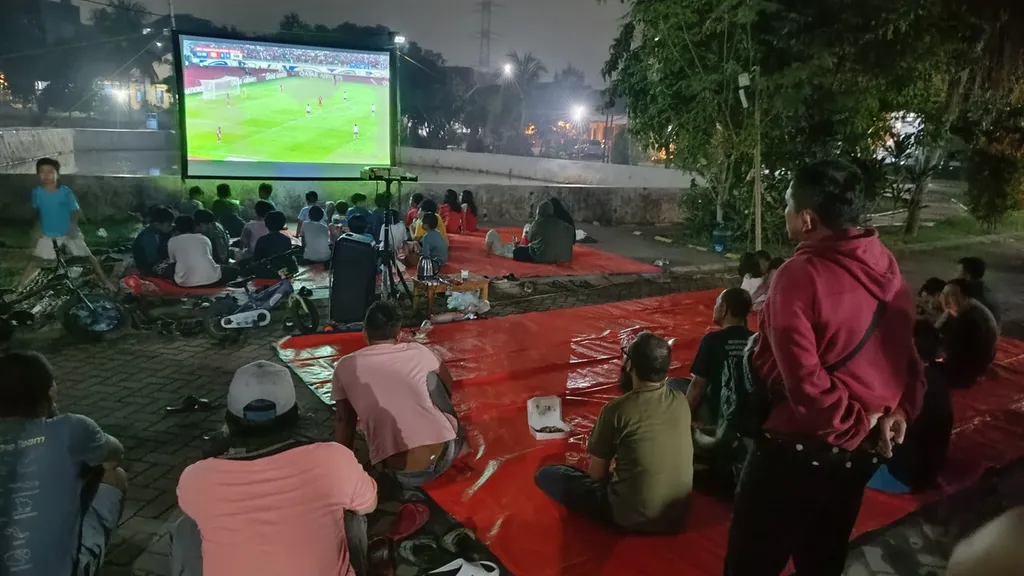
The behavior of watching illegal football matches is also related to the mentality of society.
Broadcast Hijacking, The “Dark Face” of Football Spectators
English
By Yohanes Mega Hendarto
13 Jun 2025 06:01 WIB · English
Live broadcasts of football matches remain a favorite spectacle for the Indonesian public. From domestic leagues to European leagues, thousands of matches are aired each year by various legal platforms.
However, behind this, illegal live streaming practices are also growing rapidly and out of control.
The ease of internet access and pirated applications exacerbates the situation. With just a mobile phone and a stable connection, anyone can watch top global matches without paying a dime.
The sources of pirated shows vary, from dark streaming sites to social media channels such as Telegram, Tiktok, and Facebook.
Watching football legally in Indonesia currently revolves around issues of access, broadcast stability, and relatively high prices.
With the abundance of competitions spread across various platforms, consumers are required to subscribe to multiple applications simultaneously. This makes the viewing experience financially draining and impractical.
Vidio has become the main provider for the English Premier League and European competitions, such as the Champions League and Europa League. To enjoy all football broadcasts on Vidio, users need to spend around Rp 99,000 per month. This service also includes the FA Cup and AFC Champions League, which are broadcast through the SPOTV channel.
For the Bundesliga and Eredivisie, Mola is still the main platform with a subscription fee of around IDR 75,000 per month.
Vision+ presents broadcasts of the Italian Serie A, French Ligue 1, and the Portuguese league at a price of approximately Rp 99,000 per month. BeIN Sports, which airs this content, is only available in the premium package of Vision+.
Amazon Prime Video also occasionally broadcasts Champions League matches exclusively. Although it is not yet dominant in the Indonesian market, Prime Video offers a subscription fee of around Rp 65,000 per month. However, not all matches are available on this platform, and its reach tends to be limited.
If a fan wants to watch all the major European leagues, then he will have to pay around Rp. 338,000 every month.
In a single competition season lasting 10 months, the total subscription cost can reach Rp 3.38 million. This amount does not include additional packages or smart TV devices for comfortable viewing.
Meanwhile, for those who only wish to follow a specific league, the costs can be lower. However, the fragmentation of broadcasts makes some fans feel compelled to subscribe to more than one service. This is one of the factors driving the emergence of illegal consumption behavior.
While there is no official government data, several industry reports indicate the scale of the problem is worrying.
Institutions such as the Coalition Against Piracy and YouGov Asia noted in 2020 that approximately 63 percent of Indonesians have accessed pirated content. Of that number, 29 percent admitted to watching sports broadcasts, including football, illegally.
An internal study by AVISI in 2023 estimated that there are more than 10 million active users in Indonesia who regularly access pirated content each month. Illegal streaming applications based on “APK” and Telegram channels are cited as the most popular channels.
In major cases such as the Champions League final or matches between two major Premier League clubs, illegal restreaming (broadcasting live video content to multiple platforms simultaneously) can be viewed by tens of thousands of people at the same time.
Several official broadcasting rights holders in Indonesia have previously revealed the level of piracy they face. In a single weekend, there can be hundreds of accounts that illegally record and disseminate their broadcasts.
Efforts to take down illegal broadcasts on various social media platforms are like an endless race: as soon as one is shut down, three more appear.
The perpetrators of illegal streaming do not always have a criminal appearance. Some are football fans who feel that subscription prices are too high or simply follow links circulating in social media groups. Unbeknownst to them, they become part of a chain of piracy that harms many parties.
Illegal access to sports broadcasts is not just a matter of illegal and immoral piracy, but also concerns cybersecurity.
Unofficial websites often contain malware or advertisements that trap users into digital fraud practices. Viewers are often unaware that their devices have been infected.
In 2023, the Ministry of Communication and Information claimed to have closed more than 700 sites that broadcast illegal content, including sites that illegally stream football matches. However, new sites continue to emerge with different names and addresses.
This measure is also insufficient to deter viewers who use Virtual Private Network (VPN) to access the site from their respective gadgets.
Viewers feel there is no legal or moral risk in watching for free. However, using illegal streaming sites can jeopardize users’ personal data. Some users even find themselves trapped in fake sites that request personal information in order to watch.
The majority of illegal streaming users utilize mobile phones and public WiFi. They are unaware that many pirated sites are infiltrated with harmful advertisements, malware, and data theft practices. Numerous illegal platforms install tracking scripts or data thieves that operate silently in the background.
Not only that, users can also fall victim to digital extortion or become trapped in phishing networks. Some sites even direct users to download harmful applications. Damage occurs not only to computers or mobile phones but also to banking accounts and other important data.
The perpetrators of illegal website provision generally operate their businesses from abroad. They utilize digital advertising networks to generate revenue from millions of clicks. In many cases, these websites operate across borders and are difficult to take legal action against.
Interpol and other international agencies have noted this pattern as part of organized crime. The general public often remains unaware that their actions contribute to supporting criminal networks. Money from advertisements on illegal sites can be used to fund other illegal activities.
For broadcasters and official streaming application rights holders, piracy is not merely a dark competitor. It is a direct threat to the business model that relies on subscriptions and exclusive broadcasting rights. When viewers opt for illegal avenues, their revenue plummets drastically.
The cost of football broadcasting rights is very high. For the English League alone, providers must spend hundreds of billions of rupiah per season. If there are not enough subscribers, this investment cannot be recouped and may result in losing broadcasting rights in the following season.
The sponsors are also having doubts. Generally, sponsors refer to the level of engagement that occurs legitimately on official platforms before advertising. If more people are watching through illegal channels, the commercial value of football broadcasts will also decline.
It doesn’t stop there, official applications also have to bear additional costs to protect their broadcasts.
DRM technology, watermarking, and IP tracking are implemented to detect piracy, all of which require significant costs. In addition, legal and technical teams must work extra hard each time illegal restreaming emerges.
Despite the existence of the Copyright Law and the Electronic Information and Transactions Law, end users are rarely subjected to legal action. Regulations primarily target content providers and owners of illegal sites. This gap is what allows the habit of watching pirated content to persist in the digital public space.
A number of digital law experts believe that Indonesia needs to strengthen the ITE Law in the context of content piracy. Enforcement should not only target providers but can also be directed at those disseminating illegal links. This is assumed to create a deterrent effect.
Several countries have taken strict measures against perpetrators and viewers of illegal streaming. In the United Kingdom and Italy, viewers can face fines or criminal charges. Indonesia does not yet have a legal mechanism as robust as that to punish viewers, but discussions in that direction are beginning to emerge.
Socialization is an important step that has not been seriously addressed. The campaign that piracy harms the football industry and endangers users is still minimal. Without a change in public attitude, the sports broadcasting industry will continue to face the risk of losing its audience and business revenue.
The public needs to realize that paying for legal content is a form of support for the advancement of sports. It also ensures their own digital security. Being a smart viewer means not being tempted by seemingly free access that carries significant risks.
Illegal streaming may seem beneficial in the short term. However, its impact could devastate the football industry and the quality of broadcasts in the long term.
As long as the mentality of “if there’s something free, why pay?” prevails in society, the quality of content will be easily sidelined. (LITBANG KOMPAS)
Serial Artikel
Sepak Bola sebagai Prestasi dan Tontonan
Pertandingan melawan timnas Argentina membangkitkan optimisme prestasi sepak bola Indonesia masa depan. Berbagai ekosistem yang mendukung kemajuan sudah berjalan dan mulai bergairah pada era kepemimpinan PSSI saat ini.
Live broadcasts of football matches remain a favorite spectacle for the Indonesian public. From domestic leagues to European leagues, thousands of matches are aired each year by various legal platforms.
However, behind this, illegal live streaming practices are also growing rapidly and out of control.
The ease of internet access and pirated applications exacerbates the situation. With just a mobile phone and a stable connection, anyone can watch top global matches without paying a dime.
The sources of pirated shows vary, from dark streaming sites to social media channels such as Telegram, Tiktok, and Facebook.
Watching football legally in Indonesia currently revolves around issues of access, broadcast stability, and relatively high prices.
With the abundance of competitions spread across various platforms, consumers are required to subscribe to multiple applications simultaneously. This makes the viewing experience financially draining and impractical.
Vidio has become the main provider for the English Premier League and European competitions, such as the Champions League and Europa League. To enjoy all football broadcasts on Vidio, users need to spend around Rp 99,000 per month. This service also includes the FA Cup and AFC Champions League, which are broadcast through the SPOTV channel.
For the Bundesliga and Eredivisie, Mola is still the main platform with a subscription fee of around IDR 75,000 per month.
Vision+ presents broadcasts of the Italian Serie A, French Ligue 1, and the Portuguese league at a price of approximately Rp 99,000 per month. BeIN Sports, which airs this content, is only available in the premium package of Vision+.
Amazon Prime Video also occasionally broadcasts Champions League matches exclusively. Although it is not yet dominant in the Indonesian market, Prime Video offers a subscription fee of around Rp 65,000 per month. However, not all matches are available on this platform, and its reach tends to be limited.
If a fan wants to watch all the major European leagues, then he will have to pay around Rp. 338,000 every month.
In a single competition season lasting 10 months, the total subscription cost can reach Rp 3.38 million. This amount does not include additional packages or smart TV devices for comfortable viewing.
Meanwhile, for those who only wish to follow a specific league, the costs can be lower. However, the fragmentation of broadcasts makes some fans feel compelled to subscribe to more than one service. This is one of the factors driving the emergence of illegal consumption behavior.
While there is no official government data, several industry reports indicate the scale of the problem is worrying.
Institutions such as the Coalition Against Piracy and YouGov Asia noted in 2020 that approximately 63 percent of Indonesians have accessed pirated content. Of that number, 29 percent admitted to watching sports broadcasts, including football, illegally.
An internal study by AVISI in 2023 estimated that there are more than 10 million active users in Indonesia who regularly access pirated content each month. Illegal streaming applications based on “APK” and Telegram channels are cited as the most popular channels.
In major cases such as the Champions League final or matches between two major Premier League clubs, illegal restreaming (broadcasting live video content to multiple platforms simultaneously) can be viewed by tens of thousands of people at the same time.
Several official broadcasting rights holders in Indonesia have previously revealed the level of piracy they face. In a single weekend, there can be hundreds of accounts that illegally record and disseminate their broadcasts.
Efforts to take down illegal broadcasts on various social media platforms are like an endless race: as soon as one is shut down, three more appear.
The perpetrators of illegal streaming do not always have a criminal appearance. Some are football fans who feel that subscription prices are too high or simply follow links circulating in social media groups. Unbeknownst to them, they become part of a chain of piracy that harms many parties.
Illegal access to sports broadcasts is not just a matter of illegal and immoral piracy, but also concerns cybersecurity.
Unofficial websites often contain malware or advertisements that trap users into digital fraud practices. Viewers are often unaware that their devices have been infected.
In 2023, the Ministry of Communication and Information claimed to have closed more than 700 sites that broadcast illegal content, including sites that illegally stream football matches. However, new sites continue to emerge with different names and addresses.
This measure is also insufficient to deter viewers who use Virtual Private Network (VPN) to access the site from their respective gadgets.
Viewers feel there is no legal or moral risk in watching for free. However, using illegal streaming sites can jeopardize users’ personal data. Some users even find themselves trapped in fake sites that request personal information in order to watch.
The majority of illegal streaming users utilize mobile phones and public WiFi. They are unaware that many pirated sites are infiltrated with harmful advertisements, malware, and data theft practices. Numerous illegal platforms install tracking scripts or data thieves that operate silently in the background.
Not only that, users can also fall victim to digital extortion or become trapped in phishing networks. Some sites even direct users to download harmful applications. Damage occurs not only to computers or mobile phones but also to banking accounts and other important data.
The perpetrators of illegal website provision generally operate their businesses from abroad. They utilize digital advertising networks to generate revenue from millions of clicks. In many cases, these websites operate across borders and are difficult to take legal action against.
Interpol and other international agencies have noted this pattern as part of organized crime. The general public often remains unaware that their actions contribute to supporting criminal networks. Money from advertisements on illegal sites can be used to fund other illegal activities.
For broadcasters and official streaming application rights holders, piracy is not merely a dark competitor. It is a direct threat to the business model that relies on subscriptions and exclusive broadcasting rights. When viewers opt for illegal avenues, their revenue plummets drastically.
The cost of football broadcasting rights is very high. For the English League alone, providers must spend hundreds of billions of rupiah per season. If there are not enough subscribers, this investment cannot be recouped and may result in losing broadcasting rights in the following season.
The sponsors are also having doubts. Generally, sponsors refer to the level of engagement that occurs legitimately on official platforms before advertising. If more people are watching through illegal channels, the commercial value of football broadcasts will also decline.
It doesn’t stop there, official applications also have to bear additional costs to protect their broadcasts.
DRM technology, watermarking, and IP tracking are implemented to detect piracy, all of which require significant costs. In addition, legal and technical teams must work extra hard each time illegal restreaming emerges.
Despite the existence of the Copyright Law and the Electronic Information and Transactions Law, end users are rarely subjected to legal action. Regulations primarily target content providers and owners of illegal sites. This gap is what allows the habit of watching pirated content to persist in the digital public space.
A number of digital law experts believe that Indonesia needs to strengthen the ITE Law in the context of content piracy. Enforcement should not only target providers but can also be directed at those disseminating illegal links. This is assumed to create a deterrent effect.
Several countries have taken strict measures against perpetrators and viewers of illegal streaming. In the United Kingdom and Italy, viewers can face fines or criminal charges. Indonesia does not yet have a legal mechanism as robust as that to punish viewers, but discussions in that direction are beginning to emerge.
Socialization is an important step that has not been seriously addressed. The campaign that piracy harms the football industry and endangers users is still minimal. Without a change in public attitude, the sports broadcasting industry will continue to face the risk of losing its audience and business revenue.
The public needs to realize that paying for legal content is a form of support for the advancement of sports. It also ensures their own digital security. Being a smart viewer means not being tempted by seemingly free access that carries significant risks.
Illegal streaming may seem beneficial in the short term. However, its impact could devastate the football industry and the quality of broadcasts in the long term.
As long as the mentality of “if there’s something free, why pay?” prevails in society, the quality of content will be easily sidelined. (LITBANG KOMPAS)
Serial Artikel
Sepak Bola sebagai Prestasi dan Tontonan
Pertandingan melawan timnas Argentina membangkitkan optimisme prestasi sepak bola Indonesia masa depan. Berbagai ekosistem yang mendukung kemajuan sudah berjalan dan mulai bergairah pada era kepemimpinan PSSI saat ini.
Credits
Writer:
Editor:
Language Editor: